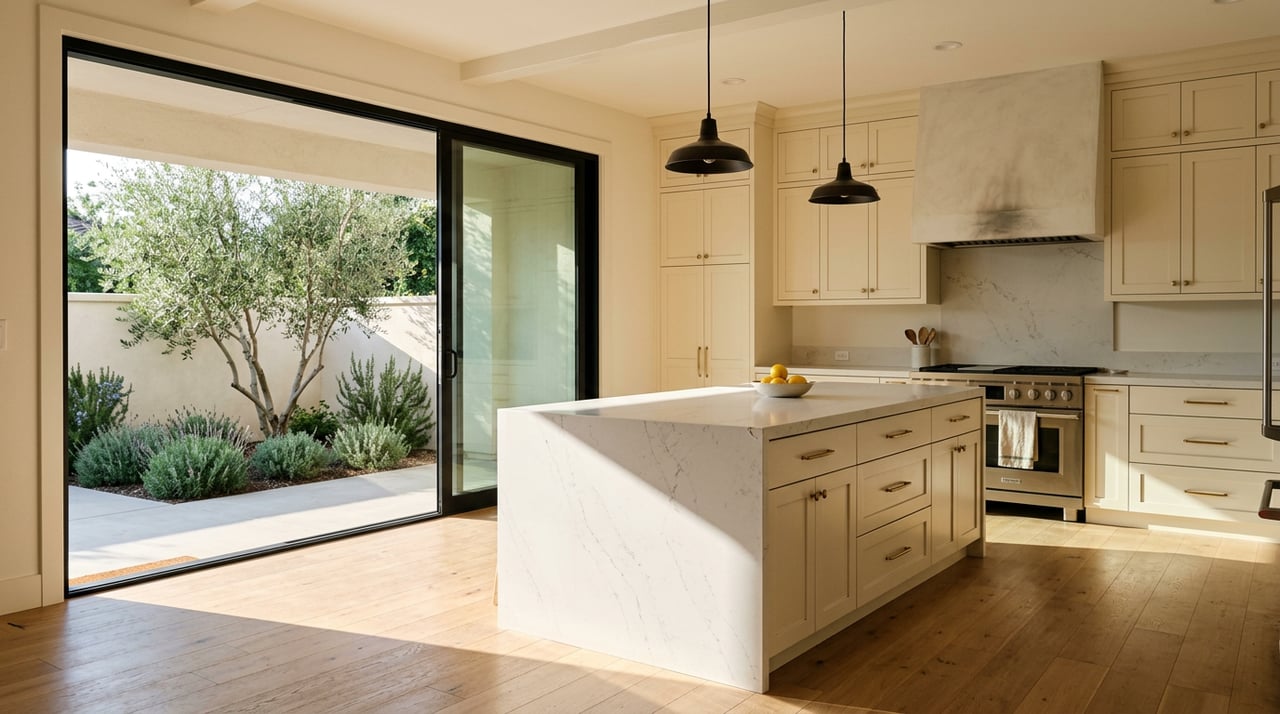
Two listings land in your inbox the same afternoon. Both are four-bedroom homes in Rocklin, priced within a few thousand dollars of each other, similar square footage, similar lot size. One sits in Stanford Ranch, built in the mid-1990s. The other sits in Sunset West, finished within the last several years. On paper, they read like the same purchase.
They are not, and the difference will not show up in either listing description.
One of these homes carries a Mello-Roos special tax that adds real money to the monthly payment every year. The other one was plumbed with pipe that the industry stopped trusting decades ago. Neither cost appears on the price tag. One shows up on a tax bill you can pull before you ever write an offer. The other shows up in an inspection report after you are already in escrow. That timing difference, not the dollar amount, is the part of Rocklin's market worth understanding before you compare two homes side by side.
Why Rocklin Has This Tax Line Item at All
Mello-Roos exists because of a math problem California created for itself in 1978. Proposition 13 capped the base property tax rate and limited how fast assessed values could climb, which protected homeowners from runaway bills but also cut off the revenue cities had used to build roads, sewer lines, and fire stations for new subdivisions. The Mello-Roos Community Facilities Act of 1982 gave cities, counties, and school districts a workaround: form a Community Facilities District, sell bonds against future special tax revenue, and use the proceeds to build the infrastructure a new development needs.
Rocklin used that tool extensively. The city's own summary confirms it currently administers eleven separate Mello-Roos Community Facilities Districts, covering territories that include Stanford Ranch, Whitney Oaks, Sunset-West, Whitney Ranch, and the Highlands. Some of those districts fund fire protection, paramedic response, and street lighting on an ongoing basis. Others paid for specific one-time projects, including the I-80 interchange at Sierra College Boulevard and the interchange connecting Blue Oaks Boulevard to Highway 65. The city's page notes that the improvements behind several of these districts have already been completed.
The Layer Most Buyers Don't Know to Look For
Here is the part that catches people off guard even after they've done their Mello-Roos homework. The eleven districts above are administered by the City of Rocklin. Rocklin Unified School District runs its own, separate from the city's, under the same 1982 Act.
Whitney Ranch is the clearest example. The bond documents behind Whitney Ranch's city-run Community Facilities District No. 10, formed in 2005 to cover roughly 825 acres with a $60 million bond authorization approved by the Rocklin City Council that April, also record that the same Whitney Ranch subdivision was separately annexed into the school district's own Community Facilities District No. 3. That is not a typo or a duplicate charge. It is two independent taxing entities, each with its own bond schedule, both landing on the same parcel's tax bill under different line-item names.
A buyer who checks a property's tax history and sees one CFD charge may reasonably assume that's the whole picture. In parts of Whitney Ranch, and potentially in other annexed phases, it isn't. This is exactly why pulling a current tax bill by Assessor's Parcel Number, rather than relying on what a neighborhood is generally known for, matters more in Rocklin than a buyer coming from a market without this history might expect.
What This Looks Like Neighborhood by Neighborhood
No two phases of the same subdivision necessarily carry identical assessments, and the amounts change as bonds amortize. Treat the neighborhood information below as a starting point for your own parcel-level check, not a final number.
| Neighborhood | Built | Special Tax Districts on Record | What They Fund |
|---|---|---|---|
| Stanford Ranch | Mid-to-late 1990s | City fire and paramedic services CFD | Fire and paramedic response, roadway and sewer improvements from original build-out |
| Whitney Oaks | Late 1990s into the 2000s | Same city fire-service CFD shared with Stanford Ranch and Sunset-West | Fire protection, landscaping and lighting maintenance |
| Sunset-West | 2000s to present, still building out the western edge | City infrastructure CFD; drainage and open-space CFD | Roadway, drainage, and open-space improvements and maintenance |
| Whitney Ranch | Formed 2005, built out over the following decade | City CFD No. 10 (825 acres, $60M bond authorization); separately annexed into Rocklin USD's CFD No. 3 | Transportation, wastewater, drainage, and landscaping infrastructure, plus school facilities |
Sunset-West's newer phases tend to carry the higher end of these obligations since the bonds behind them are younger and further from payoff. That gap is not unique to Rocklin. JVM Lending's 2026 buyer guide notes that effective property tax rates in CFD-heavy zip codes can reach 1.5 percent to 1.7 percent of a home's value, compared with 1.1 percent to 1.3 percent in areas without them, a spread that adds up fast on a Rocklin home priced near the city's August 2026 median list price of $750,000.
The Trade Older Neighborhoods Are Actually Offering
Here is where the comparison gets interesting rather than just expensive. Stanford Ranch's homes, built primarily in the mid-1990s, generally carry lighter special tax obligations than the newer Whitney Ranch and Sunset-West phases. That reads like the cheaper choice on a tax bill.
It usually isn't the cheaper choice overall. It's a different kind of cost, disclosed at a different point in the transaction. A meaningful number of Rocklin homes built in the early-to-mid 1990s, Stanford Ranch prominently among them, were plumbed with polybutylene supply pipe, a material the plumbing industry moved away from once its long-term failure rate became clear. Replacing it in a typical home runs $8,000 to $15,000. That figure doesn't appear on a tax bill, a CFD disclosure document, or a listing sheet. It appears in the home inspector's report, after you're already under contract, and it becomes a negotiation point rather than a known quantity you priced in from the start.
That is the actual trade a Rocklin buyer makes by choosing an older, lower-Mello-Roos neighborhood over a newer one: a known tax obligation swapped for the possibility of a substantial repiping expense.
One more wrinkle worth weighing into that math: homes within the Whitney High School attendance area, which includes Whitney Ranch, have historically commanded a premium of $25,000 to $50,000 over comparable homes in other Rocklin school zones. Some of the extra carrying cost from Whitney Ranch's stacked CFDs may come back to you at resale in the form of that boundary premium. Stanford Ranch's lighter tax load doesn't come with an equivalent offset once repiping is accounted for.
Verify Before You Write the Offer
- Pull the current year's tax bill by Assessor's Parcel Number through Placer County's records, not by neighborhood name. Phases within the same subdivision can carry different CFDs, and a subdivision's reputation for being "light" or "heavy" doesn't apply parcel by parcel.
- For new construction, request the CFD disclosure document.
- During escrow, read the preliminary title report line by line for anything labeled CFD, Direct Charge, or Special Assessment. More than one can appear on a single parcel, and they won't always share a name that makes the connection obvious.
- If you're shopping in Stanford Ranch or another Rocklin neighborhood built before 1996, ask directly whether the home retains its original supply plumbing and get a repipe estimate before you finalize your offer, not after your inspection contingency is already ticking.
Frequently Asked Questions
If a home's current tax bill shows no Mello-Roos, am I in the clear? Not automatically. Older phases of a subdivision may have retired their original bonds while a separate annexation of the same development remains active. City CFDs and school district CFDs also appear as separate line items, so a bill with one charge doesn't rule out the other.
Is polybutylene plumbing a dealbreaker? It isn't automatically, but it is a legitimate cost to price into your offer or negotiate once your inspector flags it. Homes with it can still insure and finance normally in most cases, though some carriers ask about it directly.
Rocklin's tax structure and its plumbing-era quirks aren't reasons to avoid a neighborhood. They're reasons to ask specific questions before you're emotionally attached to a specific house. If you're weighing a move into Stanford Ranch, Whitney Ranch, Sunset-West, or anywhere else in Placer County and want a second set of eyes on what a property's full carrying cost actually looks like, Samantha Gray is a good place to start that conversation. Schedule a consultation before you write the offer, not after.
This article is general information, not legal, tax or financial advice. Consult a qualified professional about your situation.