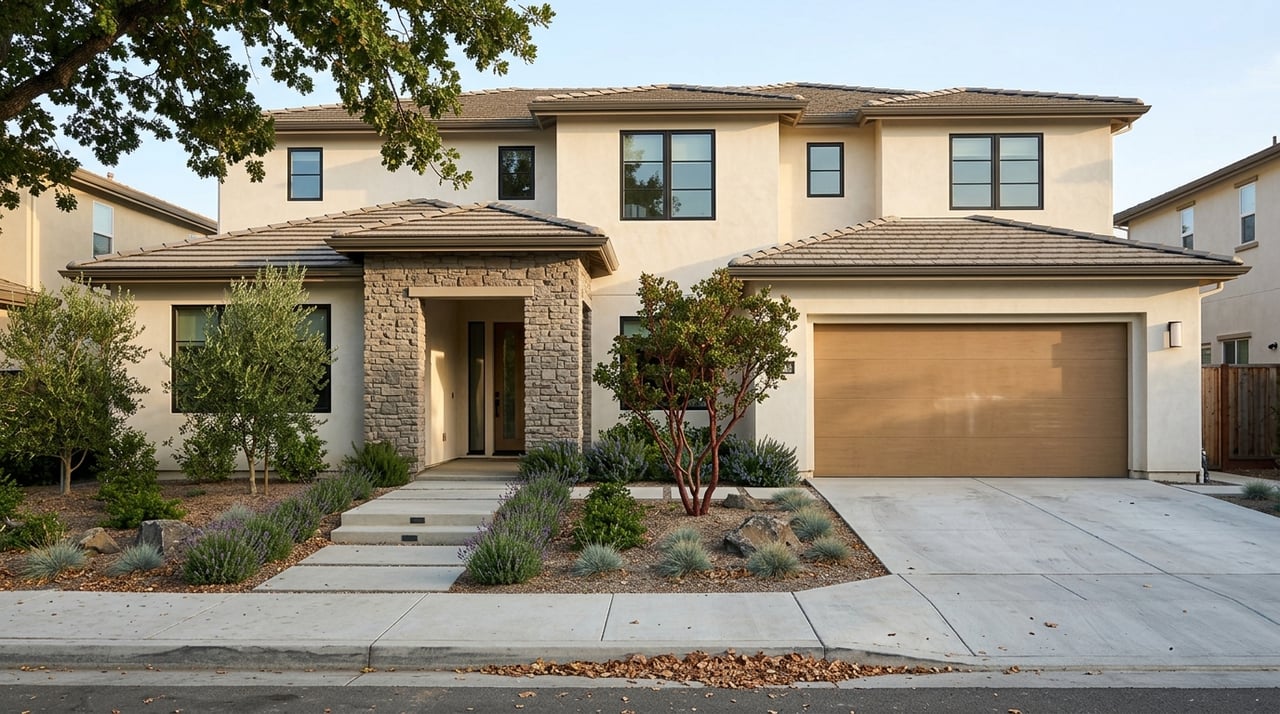
If you are thinking about a move to Rocklin, you probably want more than a map pin and a list of home prices. You want to know how the city actually feels from Monday morning routines to weekend plans. The good news is that Rocklin offers a practical mix of convenience, outdoor access, and regional connectivity that fits many different lifestyles. Let’s take a closer look at what everyday life in Rocklin really looks like.
Rocklin at a glance
Rocklin is a growing city in South Placer County, located at the intersection of Interstate 80 and State Highway 65. Its setting includes rolling hills and broad views toward the Sierra Nevada and Sutter Buttes, which gives many parts of the city an open, spacious feel.
The U.S. Census Bureau estimates Rocklin’s population at 76,821 as of July 1, 2025, up from 71,601 in 2020. Census data also shows an average household size of 2.78, with 24.6% of residents under 18 and 14.3% age 65 and older. That profile points to a city with a strong mix of households and a noticeable residential focus.
Rocklin is also largely owner-occupied. The owner-occupied housing rate is 68.3%, which supports the sense that many residents put down roots here and stay connected to the community over time.
Daily life feels suburban and convenient
In day-to-day life, Rocklin tends to feel organized around ease and accessibility. Many errands, school drop-offs, work commutes, and after-school activities happen along major roads and retail corridors, so the city often works best when you can move efficiently between different parts of town.
Unlike places built around a single compact downtown, Rocklin’s shopping, dining, and services are spread across several key areas. That means your daily routine may involve driving between home, parks, stores, and appointments, but it also means many essentials are close to residential neighborhoods.
For many residents, that balance is the appeal. You get a suburban layout with established services, while still having options for recreation, community events, and regional travel.
Parks shape everyday routines
One of the clearest parts of life in Rocklin is how much the park system influences the local rhythm. City sources describe Rocklin as having 37 to 38 developed parks and more than 200 acres of open space, even though the exact park count can vary slightly by city page.
That larger point matters more than the exact number. Parks are not just background amenities here. They are part of how people spend time, gather with friends, join recreation programs, and break up the workweek with something outdoors.
The city notes that local parks host cultural events, sports, family picnics, recreation programs, and quieter forms of relaxation. Programs also span a wide range of interests, including Active Adults activities, arts, STEM, and sports.
Quarry Park stands out
Quarry Park is one of Rocklin’s central community spaces. It combines trails, open space, wildlife, and active recreation with a downtown-style event setting, so it often becomes a natural place for concerts, outings, and weekend meetups.
Quarry Park Adventures adds another layer with zip lines, rock climbing, and rappel experiences. As of 2026, the city is also hosting a Saturday morning community farmers market at the Quarry Park Adventures parking lot, which helps reinforce the area as a weekend gathering point.
Outdoor options go beyond city parks
Rocklin’s outdoor lifestyle is not limited to neighborhood parks. Sierra College’s Rocklin campus includes 70 acres of walking trails through oak woodlands, giving residents another option for fresh air and informal exercise.
That adds variety to everyday life. Depending on your routine, you might spend one day at a playground or sports field and another walking a trail in a more natural setting.
Shopping and errands are spread out
Rocklin is very practical when it comes to errands, but the city is built around corridors rather than a single shopping district. Local retail activity is concentrated in places like Rocklin Crossings on Crossings Drive and Blue Oaks Town Center and Blue Oaks Marketplace around Lonetree and Blue Oaks Boulevard.
In everyday terms, that means you are likely to handle shopping and casual dining in clusters based on where you live or which route you already travel. Many residents build routines around these centers because they simplify stops for groceries, meals, and other day-to-day needs.
This pattern supports convenience, but it also shapes the feel of the city. Rocklin tends to function more like a network of connected pockets than one walk-everywhere core.
The library adds a community anchor
The Rocklin Library on Granite Drive adds another layer to daily life. Opened in 2011, it provides Wi-Fi, meeting rooms, outdoor patio space, and bus access.
For some residents, that means a useful public space for study, meetings, or quiet time. For others, it simply adds to the city’s overall sense of having established community infrastructure beyond shopping centers and parks.
Schools and campuses influence the rhythm
Education has a visible presence in Rocklin. Rocklin Unified School District is based in town, and the city also includes Sierra College’s 311-acre Rocklin campus with more than 50 buildings, as well as Jessup University’s 125-acre campus with residential facilities.
Even if you are not directly connected to a school or college, that educational footprint still shapes the city’s pace. Traffic patterns, event calendars, and neighborhood routines often reflect a school-centered rhythm throughout the year.
For many buyers, this matters because it adds structure and stability to the way different parts of Rocklin function. It also helps explain why some areas feel especially active during weekday mornings, afternoons, and seasonal campus events.
Getting around Rocklin
Rocklin is easiest to navigate by car. Interstate 80 and State Highway 65 are the major transportation routes, and they play a big role in how residents move through the city and connect to the broader Sacramento region.
That said, Rocklin is not limited to driving alone. Placer County Transit operates fixed routes that include Lincoln, Rocklin, and Sierra College, plus a weekday commuter bus to downtown Sacramento. Service runs Monday through Saturday, with no Sunday service.
Rocklin also has rail access through the Rocklin station, served by Capitol Corridor and Amtrak, with nearby Placer County Transit connections. For some residents, that creates a useful alternative for certain commute patterns or regional trips.
Why the city can feel spread out
Part of Rocklin’s layout is shaped by Interstate 80, which still bisects part of the city. The Rocklin Road and Sierra College Corridor project reflects the city’s ongoing effort to improve pedestrian, bicycle, transit, and vehicle connections across that divide.
In practical terms, this helps explain why Rocklin often feels more connected by driving than by walking. You can get where you need to go, but some destinations are spread apart, and the city’s transportation network still reflects that suburban pattern.
Neighborhoods feel like distinct pockets
Rocklin does not feel like one uniform subdivision. Its housing growth happened across different periods, with major expansion beginning in the 1970s and continuing through later master-planned communities such as Stanford Ranch, Whitney Oaks, and Whitney Ranch.
Older and newer areas create a more layered city than some buyers expect. Planning materials also reference places such as Sunset Whitney, South of Sunset Boulevard, Central Rocklin, Southeast Rocklin, Sunset West, and Northwest Rocklin.
That matters when you are trying to understand daily life. Different parts of Rocklin can offer different street patterns, home styles, commute access, and proximity to parks, shopping, or campuses.
What the housing picture suggests
Current census data helps frame the market. Rocklin’s median value of owner-occupied homes is $703,400, and the median monthly owner cost with a mortgage is $3,063.
Those numbers point to a mostly owner-occupied suburban market with a mid-to-upper price profile. For many buyers, Rocklin appeals because it combines residential stability with access to parks, schools, and major commute routes.
If you are comparing parts of Placer County, Rocklin often stands out for buyers who want convenience and established infrastructure in a city that continues to grow. The exact fit depends on the area, property type, and your day-to-day priorities.
Who tends to enjoy Rocklin most
Rocklin can be a strong fit if you want a suburban setting with practical amenities and an active outdoor component. It may also appeal to you if your routine benefits from highway access, retail convenience, and a city layout built around residential neighborhoods rather than dense urban blocks.
You may especially appreciate Rocklin if you are looking for:
- A city with a strong owner-occupied feel
- Regular access to parks and open space
- Shopping and errands along major corridors
- Regional connections through I-80, Highway 65, bus service, and rail
- A range of neighborhood pockets rather than one uniform housing pattern
The trade-off is simple. Rocklin offers convenience and variety, but many destinations are spread out, so daily life often works best when you are comfortable driving between them.
Why local guidance matters in Rocklin
Because Rocklin is made up of distinct pockets, two homes in the same city can offer very different daily experiences. Commute routes, park access, nearby shopping, school-area boundaries, and the age or style of development can all change how a neighborhood feels in practice.
That is why local guidance matters when you are buying or selling here. Understanding the lifestyle differences between areas is just as important as understanding pricing, timing, and negotiation strategy.
If you are considering a move in Rocklin or planning your next sale, The Gray Group can help you evaluate the city through a practical, local lens and make a confident decision.
FAQs
What is everyday life like in Rocklin, CA?
- Everyday life in Rocklin is generally suburban, convenience-oriented, and shaped by parks, schools, shopping corridors, and regional commute routes.
How do most people get around in Rocklin?
- Most residents get around Rocklin by car, although Placer County Transit and rail service at Rocklin station offer additional options.
Are parks a big part of life in Rocklin?
- Yes. Rocklin has 37 to 38 developed parks, more than 200 acres of open space, and a wide range of recreation programs and community events.
Does Rocklin have a walkable downtown?
- Rocklin has gathering spaces such as Quarry Park, but everyday shopping and errands are generally spread across suburban retail corridors rather than a single compact downtown.
What types of neighborhoods are found in Rocklin?
- Rocklin includes a mix of older and newer residential areas, with neighborhoods and planning areas such as Stanford Ranch, Whitney Oaks, Whitney Ranch, Sunset Whitney, Central Rocklin, and Northwest Rocklin.
Is Rocklin a mostly owner-occupied housing market?
- Yes. Census data shows that 68.3% of Rocklin homes are owner-occupied, which supports the city’s established residential character.