Thinking about buying land in Penryn because it looks simple on paper? With acreage, what you see from the road is only part of the story. Before you buy, you need to know how Placer County reviews zoning, access, water, septic, drainage, and fire exposure so you can understand what the parcel can realistically support. Let’s dive in.
Why Penryn Land Needs Extra Review
Penryn is an unincorporated community in Placer County, which means land-use review typically happens through the county rather than a city. The Horseshoe Bar/Penryn Community Plan guides local project decisions, and county zoning is supposed to align with that plan.
That matters because acreage purchases are often more complex than a standard home purchase. In Penryn, the parcel itself is the product, and the details behind that parcel usually determine whether your plans are straightforward or much more involved.
Start With Zoning And Land Use
One of the first things to verify is the parcel’s zoning and land-use designation. Placer County’s zoning ordinance includes agricultural, forest, open-space, and residential zones, along with combining overlays like flood hazard and geological hazard.
This is why two nearby parcels that look almost identical can have very different development potential. Setbacks, permitted uses, overlays, and permit paths can vary from one property to the next.
The Horseshoe Bar/Penryn Community Plan includes designations such as rural residential, low-density residential, medium-density residential, open space, commercial, and riparian drainage. It also reflects how mixed development patterns can be in the Penryn area, including places with public water and sewer and other areas that rely on rural infrastructure.
What To Check First
For an early review, confirm these basics:
- Zoning
- Community plan land-use designation
- Recorded map status
- Assessor map
- Existing permits
- Any flood, geological, or other overlays
Placer County provides GIS, zoning, permit-history, and permit-status tools that can help you gather these baseline facts early.
Buildability Is Parcel Specific
A common mistake with land is assuming a parcel is buildable just because it is large or because nearby lots are improved. In Penryn, buildability is highly parcel specific.
Topography, drainage, easements, recorded-map status, and utility access can all affect what you can do. Even if a parcel appears usable, county review may uncover constraints that change your layout, budget, or timeline.
If your long-term goal is to split the property, that deserves its own review from day one. In Placer County, minor land divisions generally involve parcel maps or lot splits of four or fewer parcels, and new lots must meet minimum parcel size rules and be able to support potable water and sewage disposal.
If You Want Future Subdivision Potential
If subdivision is part of your plan, keep these points in mind:
- The county reviews minor land divisions
- A tentative map is required
- CEQA review may be part of the process
- New lots must conform to minimum parcel size standards
- New lots must support water and sewage disposal
A parcel that works for one home today is not automatically a good candidate for future division.
Access Can Change Your Budget
Access is one of the most important practical issues with acreage. If work affects a county-maintained road easement or right-of-way, Placer County requires an encroachment permit.
That can come into play sooner than many buyers expect. Utility trenching in the right-of-way may trigger utility encroachment review, and even residential driveways may require permit review if they affect the public right-of-way.
In simple terms, access is not just about whether you can physically reach the lot. It is also about whether the route, driveway design, and utility path work within county requirements.
Topography, Grading, And Drainage Matter
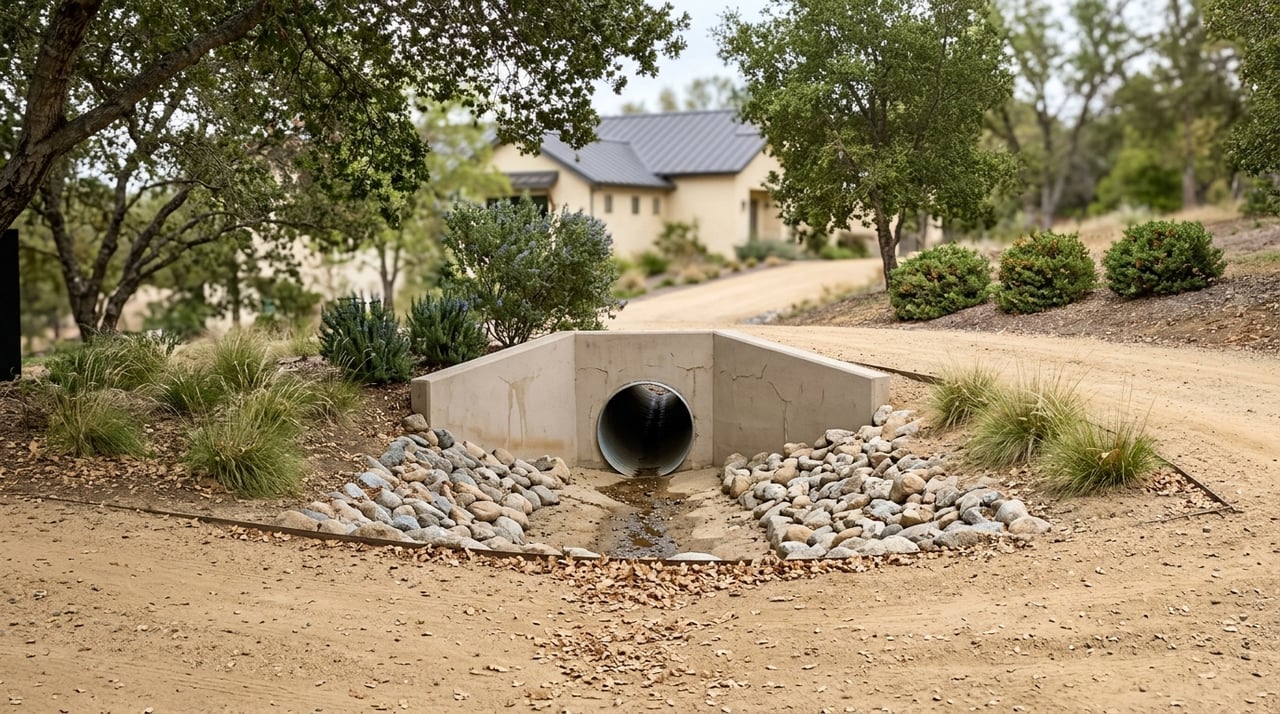
Land that looks beautiful can still be expensive to improve. Grading is often one of the biggest cost variables on acreage, especially if the site has slopes, drainage channels, fills, cuts, or retaining-wall needs.
Placer County requires grading permits for larger cuts or fills, excavation over certain thresholds, grading in floodplains, grading near drainage courses or wetlands, and large retaining walls. The community plan also says subdivision design should account for natural landform, topography, drainage channels and swales, visibility, noise, and compatibility with surrounding properties.
That means your site plan may need to respond to the land rather than force the land to match your first idea. On acreage, flexibility is often part of a smart buying strategy.
Flood And Fire Exposure Need Early Review
Flood and fire conditions can affect design, cost, and ongoing property responsibilities. If a parcel adjoins a flood-prone area, the community plan says site-specific floodplain studies should be required before new development.
For unincorporated properties, Placer County flood-zone determinations can be requested through Public Works. Buyers can also review FEMA flood maps as part of their preliminary research.
Fire exposure is another major factor in Penryn. Placer County’s Fire Hazard Severity Zone viewer applies to unincorporated areas, and very high hazard zones may involve defensible-space requirements, home-hardening requirements, disclosure obligations, and Wildland-Urban Interface building-code standards.
The county also states that 100 feet of defensible space is required by law, with Zone 0 extending 5 feet from structures. Its hazardous vegetation ordinance can apply to improved parcels and, in some cases, unimproved parcels when vegetation creates a hazard to neighboring structures or access routes.
Why Fire Review Matters Before You Buy
Fire-zone research can help you better understand:
- Possible building-code requirements
- Ongoing vegetation management responsibilities
- Site planning limitations near structures
- Potential disclosure and maintenance considerations
For many buyers, this is not a reason to avoid a parcel. It is a reason to go in with clear expectations.
Verify Water And Sewer Early
Utility assumptions can cause expensive surprises, especially on acreage. In the Penryn area, some locations are served by public sewer systems, while more rural areas may rely on on-site sewage disposal.
The community plan also notes that some low-density residential areas have public water and sewer facilities. That mix is exactly why you should verify service on the specific parcel rather than rely on nearby properties.
If public sewer is not available, Placer County says a septic system is required for on-site sewage disposal. Before plans are drawn, the county checks whether a soils report already exists, and if not, soils testing is required to determine septic type, location, and site.
The county says septic system design depends on groundwater levels, percolation rates, and soil quality. In other words, the land itself will help determine what is possible.
Why Septic Affects More Than The Main House
Septic planning can influence future improvements too. Placer County advises owners to consider repair-area needs, neighboring well locations, property setbacks, and existing septic components before adding things like:
- A bedroom addition
- A guest house
- A pool
- A pond
- A second driveway
- An outbuilding
If you are buying acreage for flexibility, this step is especially important.
Well Feasibility Is A Major Due-Diligence Item
If a parcel does not have access to public drinking water, Placer County says the owner will need to drill a well. Well work is handled through Environmental Health permitting.
That makes well feasibility and water quality one of the most important early checks for rural land. Before you get attached to a site plan, you want a realistic understanding of whether the parcel can support the water needs tied to your intended use.
A Smart Research Sequence For Buyers
Acreage due diligence usually goes more smoothly when you review the parcel in a clear order. Placer County’s online tools can make the first phase much easier by giving you access to zoning lookup, GIS maps, historical permits, permit applications, inspections, appointments, and document search.
A practical sequence for Penryn land buyers is:
- Confirm zoning and land-use designation
- Check recorded maps and easements
- Verify flood and fire status
- Review access and grading constraints
- Confirm water and sewage disposal options
If the parcel still looks promising after that first pass, the next step may be a deeper pre-development review. For more complex projects, Placer County requires a pre-development meeting before environmental questionnaire submittal for items such as conditional use permits, subdivisions over four lots, rezonings, general plan amendments, and specific plans.
Expect The Timeline To Vary
One of the biggest misconceptions about land purchases is that there is a standard timeline for determining feasibility. In reality, the timeline is parcel dependent.
A simple records review may move fairly quickly. But septic issues, well drilling, floodplain questions, grading requirements, utility extensions, or land-division plans can extend the process because each issue may involve a different review path.
That is why patience and upfront investigation matter so much. The more clearly you define your goals early, the easier it is to focus on parcels that truly fit them.
The Bottom Line On Buying Penryn Land
If you are buying acreage or land in Penryn, the smartest approach is to treat due diligence as part of the purchase decision, not something to sort out later. Zoning, access, topography, drainage, fire exposure, water, and septic can all shape whether a parcel supports your plans and budget.
With the right research, Penryn land can be a strong fit for buyers looking for space, long-term flexibility, or development potential. If you want local guidance on evaluating acreage, land-use considerations, and how a parcel fits your goals, connect with Samantha Gray.
FAQs
What should you check first before buying land in Penryn?
- Start with zoning, community plan land-use designation, recorded map status, assessor map, permit history, and any overlays such as flood or geological hazards.
How do zoning rules affect acreage in Penryn?
- Zoning can affect permitted uses, setbacks, overlays, and permit requirements, so two similar-looking parcels may have very different build potential.
Can you subdivide acreage in Penryn later?
- Possibly, but Placer County reviews minor land divisions, and new lots must meet minimum parcel size rules and support potable water and sewage disposal.
How important is septic review for Penryn land?
- It is very important because if public sewer is unavailable, the parcel will need on-site sewage disposal, and soils, groundwater, and percolation can affect system design.
Do rural parcels in Penryn always have public water?
- No. Some areas have public water and sewer, while other parcels may require a well and on-site sewage disposal.
Why does fire-zone status matter when buying land in Penryn?
- Fire-zone status can affect defensible-space rules, home-hardening requirements, disclosure obligations, and building-code standards in unincorporated areas.